Pediatric Orthopedics in MéridaBabies, children and teens, from birth to 17.
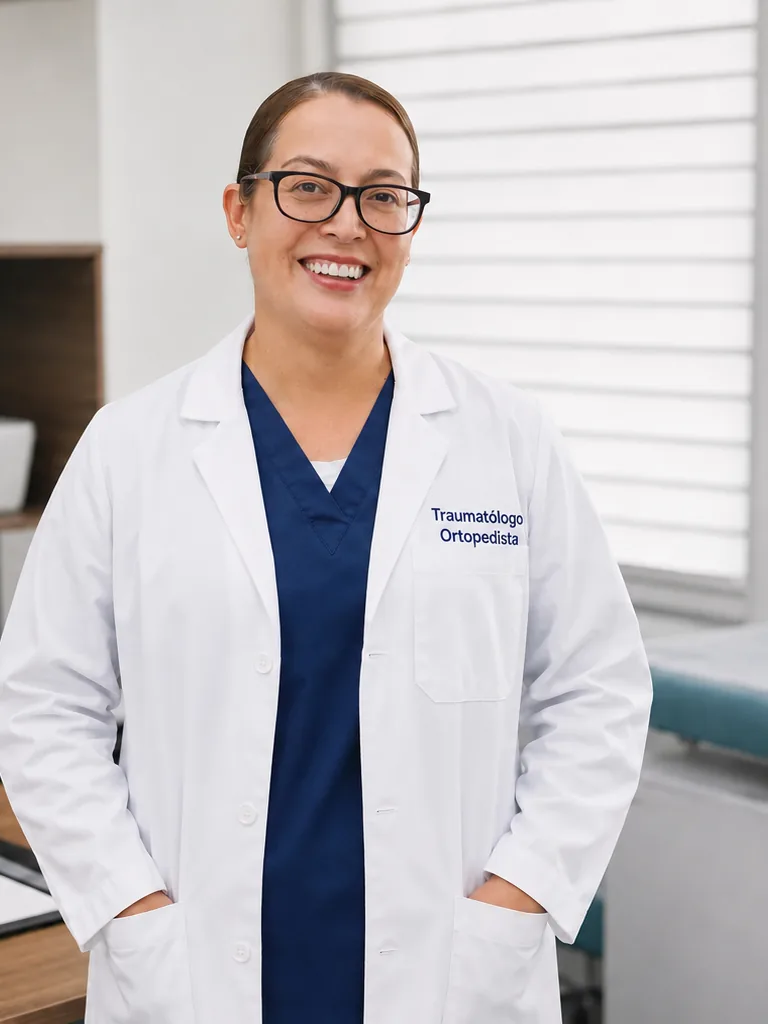
Dr. Jelitze Sosa Colomé has high-specialty training in Pediatric Orthopedics (UNAM) and evaluates bones, joints and muscles as children grow — calmly, and with a clear explanation for parents.
Message Dr. Sosa on WhatsAppIn English · Office in Altabrisa, Mérida · Cost before you book
Children’s bones and joints change a lot as they grow. Many things that worry parents — slightly bowed legs, flat-looking feet, walking with the toes pointed in — are often part of normal development and correct themselves with time. Dr. Sosa’s job is to tell you, honestly, what is expected for your child’s age and what is worth watching or treating early.
A key point in the first months of life is screening for developmental dysplasia of the hip, when the hip has not formed or fitted correctly. When indicated, Dr. Sosa uses hip ultrasound in young babies, which involves no radiation; as children grow, an X-ray can be more useful.
Most pediatric orthopedic conditions are managed without surgery: observation and follow-up, guidance on posture, footwear and activity, exercises or therapy when needed and, in specific conditions, a brace or harness.
When to reach out
- Family history of hip dysplasia, or your baby was born in breech position
- A “click” in the hip during diaper changes, or uneven leg or buttock creases
- One leg that looks shorter, or one hip that opens less
- Very flat feet, or feet turned in or out, that cause pain or tiredness
- Constant toe-walking or in-toeing, or an uneven gait
- Very bowed legs or knock-knees that get worse or do not improve with age
- Limping, or pain in the legs, knees, hips or back
Treatment options
Physical exam and developmental follow-up
An age-appropriate exam and, when everything looks right, observation with check-ups to confirm that growth stays on track. In many cases, that is all that is needed.
Hip ultrasound for dysplasia screening
In babies in their first months, when indicated, ultrasound shows how the hip is forming without radiation. As the baby grows, an X-ray may be more useful.
Conservative care: guidance, footwear, therapy and exercises
Guidance on posture, footwear and physical activity, plus exercises or physical therapy when needed to support development and relieve discomfort.
Braces or a harness in selected cases
Some conditions, such as certain degrees of hip dysplasia caught early, can be managed with a harness or brace that helps the hip form well. This is assessed individually, and you are shown how to use it.
The right option depends on your case. Dr. Sosa recommends a treatment only after reviewing your history and studies.
Cost of your visit
You are seen at Dr. Sosa’s office at Torre Millenium, in the Altabrisa area of Mérida. We tell you the cost of the consultation — and of any procedure or study you need — when you book, and it is generally lower than in the US or Canada. If you are visiting Mérida, let us know your travel dates so we can fit everything into your stay.
Dr. Sosa does not work with insurance companies: payment is made directly at the office, by cash, credit or debit card, or bank transfer.
After your visit
In pediatric orthopedics, time and growth are part of the treatment. When everything looks normal, follow-up is simply a few check-ups to confirm that development is on track. When conservative care starts — exercises, therapy or a brace — Dr. Sosa explains in detail how to handle it at home and schedules visits to check the response. Every child develops at their own pace, so she does not promise exact timelines or results, and she will tell you clearly if a more specialized evaluation is ever advisable.
Frequently asked questions
At what age should my baby’s hips be checked?
Hip checks are part of the routine care of newborns and the first months of life. They are especially recommended when there is a family history of dysplasia, if the baby was born breech, or if the pediatrician noticed something during the exam. The first months are the ideal time, because ultrasound can show the hip without radiation.
My child has flat feet. Is it serious?
In most young children, flat feet are a normal part of development: the arch forms over the years with movement. Often only observation is needed. It is worth an evaluation when there is pain, your child tires easily when walking, the foot looks very turned, or it does not improve with age.
My child walks with the toes pointed in, or on tiptoe. Should I worry?
Both are common in young children and often correct themselves as they grow. However, if it is very marked, only on one side, causes frequent falls or persists with age, it is worth checking to rule out other causes.
Does hip dysplasia always need surgery?
No. When it is detected early, especially in the first months, many cases are managed conservatively — for example with a harness or brace that helps the hip form correctly. Surgery is reserved for specific situations or for cases found later. Each case is assessed individually.
Does my child need orthopedic shoes or insoles?
Not always. Many children do not need them, and comfortable, flexible footwear is usually enough. In some specific cases they can help — which is why each child is evaluated before anything is recommended.
Tell us about your case
Message Dr. Sosa on WhatsApp: tell her what is going on and, if you have them, send your X-rays, MRI or reports. You will hear back with the suggested next step and the cost, so you can plan your visit before you book anything.
WhatsApp +52 999 198 2136Messages only — appointments are arranged on WhatsApp. Dr. Sosa answers personally.
Office
Torre Millenium, Office 301A (3rd floor)
Calle 15 No. 491, Col. Altabrisa
97130 Mérida, Yucatán, Mexico
Parking available.
Open in Google MapsOffice hours
Monday to Friday, 9:00 a.m. – 8:00 p.m.
Saturday, 9:00 a.m. – 2:00 p.m.
Mérida time (Central Standard Time, UTC−6, all year).